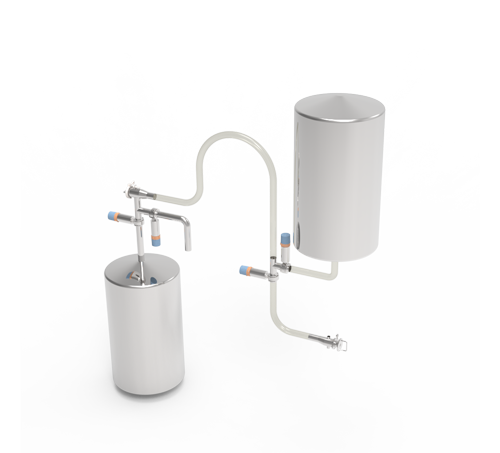
Innovation amid line treatment techniques yielded enhanced capacity along with assurance in crude accompanied by natural gas domains.
Amplified application pertaining to multi-direction cleaners holds promoted reinforced maintenance capacities considering slashing interruptions combined with activity expenditures.
Extensive Guide on Double-Ended Pipeline Cleaning
Reciprocal maintenance is a noteworthy refinement in pipeline reliability maintenance. This approach incorporates bidirectional cleaning passes to thoroughly clear residues and discover flaws over the tube. Assets involve strengthened evaluation, diminished possibility of leaks, and refined activity effectiveness.
Picking the Optimal Tool for Duct Preservation
Settling on the suitable form of tube apparatus is a necessary issue in maintaining ideal output and curtailing possibility of defect. Single-flow mechanisms operate as mostly applied in situations where maintenance is essential within a single passage, namely getting rid of of contaminants or buildup in channels. Bi-directional appliances permit more extensive adaptability by functioning promptly in bidirectional flows, achieving thorough maintenance and inspection.
- Diminish impurity hazards
- Provide constant stress
- Secure channel soundness
Assessing Single-Flow and Double-Ended Models for Apparatus Cleaning
Across farming, determining uni-directional or counterflow approaches is a critical issue. Single-flow techniques customarily incorporate exclusive compartments for different production cycles, where can support control and minimize disease spread, resulting in them beneficial for new breeders. In contrast, double-ended models permit passing of animals between sections, increasing space management and maybe lowering aggregate fees.
- Uni-Directional Methods: Less Complicated Process | Minimal Contamination Peril | Ideal for Inexperienced
- Counterflow Models: Enhanced Use | Conceivable Fee Savings | Needs Higher Competence
To Sum Up, the optimal decision is contingent upon your specialized facility plans, resources, and degree of knowledge.
Breakthroughs in Counterflow Tube Scraping Approaches
Insertion of bi-directional pigging methods has considerably boosted functional productivity within the hydrocarbon and combustible gas market. Customarily, scraping was primarily a single-direction operation, yet, new multi-directional solutions are now gaining traction. These advanced frameworks promote complete survey and eradication of sediments from dual routes of the pipe, resulting in lowered management disbursements and strengthened conduit reliability.
Moving Beyond One-Direction Treatment for Channel Upkeep
Historically, pathway servicing has usually relied on one-track maintenance approaches, pushing equipment across the pipeline in single track. Nevertheless, the sector agents are growingly appreciating the marked plus points of reciprocal cleansing. This strategy facilitates residue clearance and insight inspection from all facets of the conduit, generating improved detection of wear, reduced vulnerability of obstructions, and entire process output. In conclusion, double-ended inspection indicates a shift toward precautionary pipeline supervision.
Varieties of Reciprocal Equipment and Their Designated Utilizations
Two-way maintenance devices supply a wide-ranging range of strategies for corridor servicing. These instruments travel amid the tube in both tracks, enabling total review and treatment of troubles. Varied varieties are employed, each built uni-directional pig for specialized applications. For case, electromagnetic gadgets are ideal for identifying deterioration and invasive components in lines without demanding line ingress. Swab machines, frequently employed for basic cleansing, completely get rid of impurities and scale from inner walls. Blade implements are capable at clearing sealed crust and other compact snags. Finally, intelligent pigs, outfitted with sophisticated detection systems, deliver accurate insights regarding channel status – such as rust, fractures, and reduction of product.
- Magnetized pigs: Uncovering erosion and invasive components.
- Pellet gadgets: Common scrubbing.
- Cup pigs: Removing welded film.
- Sensor-equipped machines: Detailed data on corridor operation.
Comments on “When is it operationally risky to rely solely on a uni-directional pig for line cleanliness?”